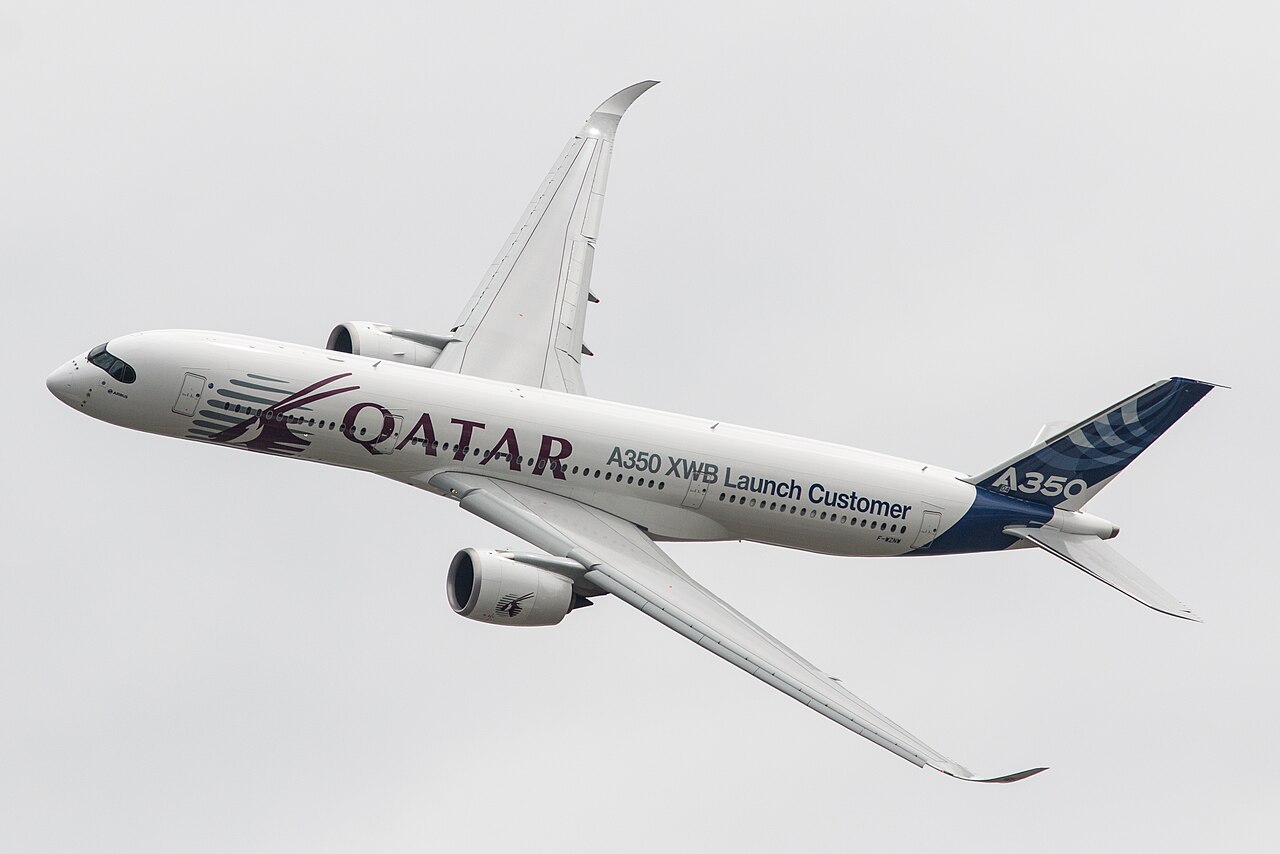
The aerospace industry has long been a crucible of innovation, constantly pushing the boundaries of engineering and design. Among the most significant leaps forward in recent decades stands the Airbus A350 XWB, an aircraft that didn't just redefine long-haul travel but truly revolutionized aircraft construction through its pioneering use of carbon fiber. While many enthusiasts might search for "AA35" to track the latest long-haul adventure of American Airlines' flight from Dallas to Auckland, this article shifts focus from a specific flight designation to explore the remarkable aircraft that has reshaped modern aviation: the Airbus A350 Extra Wide Body. This twin-engine marvel represents a paradigm shift, harnessing advanced composite materials to deliver unparalleled efficiency, range, and passenger comfort.
The A350 XWB, a testament to Airbus's forward-thinking vision, emerged from a fiercely competitive landscape, designed from the ground up to tackle the challenges of a globalized world. Its story is one of ambitious design, meticulous engineering, and a commitment to sustainable air travel, making it a cornerstone of many airline fleets today and a symbol of aviation's ongoing evolution.
The Birth of a Game-Changer: From Concept to XWB Reality
The journey of the Airbus A350 began in 2004, initially conceived as a more modest evolution of the popular A330, primarily to counter the emerging threat of Boeing's revolutionary 787 Dreamliner. This early proposal, featuring composite wings, advanced winglets, and new efficient engines, aimed to provide a cost-effective response. However, market feedback proved decisive. Airlines and industry experts demanded more than just an upgrade; they called for a clean-sheet design that could truly compete and set new standards.
Responding to this clear demand, Airbus dramatically pivoted in 2006, scrapping the A330-derivative concept in favor of the ambitious "eXtra Wide Body" (XWB) design. This decision marked a turning point, committing Airbus to a ground-up development process that would embrace cutting-edge technologies. The A350 XWB was powered by two advanced Rolls-Royce Trent XWB high bypass turbofan engines, specifically designed for this aircraft, promising significant gains in fuel efficiency and reduced emissions. The culmination of years of intense design and manufacturing efforts saw the prototype take to the skies for its maiden flight on June 14, 2013, from Toulouse, France. Its rapid path to market continued with type certification from the European Aviation Safety Agency (EASA) in September 2014, swiftly followed by approval from the Federal Aviation Administration (FAA) just two months later, paving the way for its entry into commercial service.
The Carbon Fiber Revolution: Lighter, Stronger, More Efficient
At the heart of the A350 XWB's transformative design lies its pioneering use of carbon-fibre-reinforced polymers (CFRP). The A350 stands as the first Airbus aircraft to have its airframe, including a significant portion of its fuselage and wings, largely constructed from these advanced composite materials. This is not merely an incremental change but a fundamental shift from traditional aluminum alloys, delivering a multitude of benefits across the board.
The advantages of carbon fiber are profound:
- Reduced Weight: CFRP is significantly lighter than metal, directly translating to lower fuel consumption and extended range capabilities. This allows airlines to operate more economically and open up new, ultra-long-haul routes.
- Increased Strength and Durability: Despite its lightness, carbon fiber boasts superior strength-to-weight ratios. This enhances structural integrity, allows for larger windows, and contributes to a safer aircraft.
- Corrosion Resistance: Unlike aluminum, composites do not corrode, leading to lower maintenance costs and longer operational lifespans for the airframe.
- Improved Fatigue Performance: Carbon fiber is less susceptible to metal fatigue, meaning fewer inspections and repairs over the aircraft's lifetime.
- Enhanced Cabin Environment: The inherent properties of composite materials allow for higher cabin pressurization (simulating a lower altitude, typically 6,000 feet instead of 8,000 feet) and increased humidity levels. This dramatically reduces passenger fatigue, dryness, and discomfort on long flights, making for a much more pleasant journey.
This "carbon fiber revolution" has had a ripple effect, enabling a holistic approach to design that prioritizes efficiency and passenger well-being, setting new benchmarks for future aircraft development.
Designing for Comfort and Capacity: The XWB Advantage
True to its "eXtra Wide Body" designation, the A350 XWB was meticulously designed with passenger comfort and operational flexibility at its core. The fuselage cross-section is a significant improvement over previous generations, offering a genuinely spacious environment even in economy class.
The standard configuration features a 3-3-3 nine-across economy seating arrangement, a notable increase in width compared to the 2-4-2 eight-across setup found on its predecessors, the A330 and A340. This wider cabin allows for wider seats and broader aisles, mitigating the cramped feeling often associated with long-haul travel. While some airlines might opt for a denser 3-4-3 ten-across economy seating on select aircraft to maximize capacity, the fundamental design ensures that even in these configurations, the cabin feels more expansive than competing narrower models. For passengers, this translates to better personal space, easier movement within the cabin, and a more comfortable journey overall.
Beyond seat width, the A350's composite fuselage plays a crucial role in passenger well-being. The ability to maintain a lower cabin altitude and higher humidity levels significantly reduces the effects of jet lag and dehydration, making arrival at your destination feel less taxing. Furthermore, the aircraft features advanced air filtration systems, mood lighting that can simulate natural daylight cycles, and larger windows, all contributing to a more tranquil and pleasant travel experience.
From an operational standpoint, the A350 also shares a common type rating with the A330, offering airlines significant cost savings and flexibility in pilot training and crew deployment, another smart design choice by Airbus.
Versatility in the Skies: A350-900 and A350-1000
The Airbus A350 family offers two primary variants, each tailored to specific market demands for capacity and range, allowing airlines to optimize their fleets for diverse route networks.
The A350-900 is the foundational variant and the first to enter service. It typically carries between 300 to 350 passengers in a standard three-class configuration. With an impressive maximum range of 15,750 kilometers (8,500 nautical miles) and a maximum takeoff weight (MTOW) of 283 tonnes (624,000 lbs), it is perfectly suited for efficient long-haul routes, connecting major global hubs and secondary cities alike.
The larger A350-1000 extends the family's capabilities further. Accommodating between 350 to 410 passengers, it offers increased capacity for higher-demand routes. Its enhanced maximum range of 16,700 kilometers (9,000 nautical miles) and a robust 322-tonne (710,000 lb) MTOW make it ideal for ultra-long-haul services, allowing airlines to operate some of the world's longest flights non-stop. Both variants showcase the flexibility and scalability inherent in the A350's design. To delve deeper into the specifics and distinctions between these two formidable aircraft, we recommend exploring our dedicated article: A350-900 vs. A350-1000: Unpacking Airbus's Flagship Variants.
The A350-900 officially entered service on January 15, 2015, with Qatar Airways serving as the launch operator, quickly demonstrating its capabilities on global routes. Following suit, the A350-1000 also entered commercial operation with the same launch customer, Qatar Airways, on February 24, 2018, further solidifying the A350's reputation as a reliable and high-performing long-haul solution.
Global Impact and Future Prospects
Since its inception, the Airbus A350 family has made a formidable impact on global aviation. As of early 2026, a remarkable 1,529 A350 family aircraft have been ordered worldwide, with over 700 delivered and 699 currently in active service with 38 different operators. This robust order book and delivery record underscore the aircraft's commercial success and market acceptance.
Singapore Airlines stands as the largest operator, boasting an impressive fleet of 65 A350s, leveraging its capabilities for its extensive network, including some of the world's longest non-stop flights. Turkish Airlines, with 110 aircraft on order, represents the largest customer, signaling a strong future presence for the A350 in their fleet expansion plans. The global A350 fleet has already completed more than 2 million flights across over 1,365 routes, safely transporting more than 530 million passengers. Remarkably, the aircraft has maintained an impeccable safety record with no fatalities, experiencing only one hull loss in an airport-safety-related incident, a testament to its design and operational integrity.
The A350 successfully succeeded the four-engine A340, offering superior efficiency and performance with only two engines. It continues to be a direct and strong competitor to Boeing's long-haul offerings, particularly the 787 Dreamliner and certain variants of the 777. While American Airlines' flight AA35 relies on the Boeing 787-9 for its ultra-long-haul to Auckland, the A350 represents Airbus's formidable answer in this competitive segment, continuously pushing the boundaries of what's possible in aviation. Looking ahead, the A350's innovative design and operational flexibility position it for continued success, with potential future developments, such as dedicated freighter versions, likely to further extend its market reach and utility.
In conclusion, the Airbus A350 XWB is far more than just another airplane; it is a symbol of the carbon fiber revolution in aviation. Through its groundbreaking use of composite materials, advanced engine technology, and passenger-centric cabin design, it has set new standards for efficiency, range, and comfort in long-haul air travel. Its journey from a market response to a global leader exemplifies the relentless pursuit of innovation that defines the aerospace industry, promising a more sustainable and enjoyable flying experience for generations to come.